
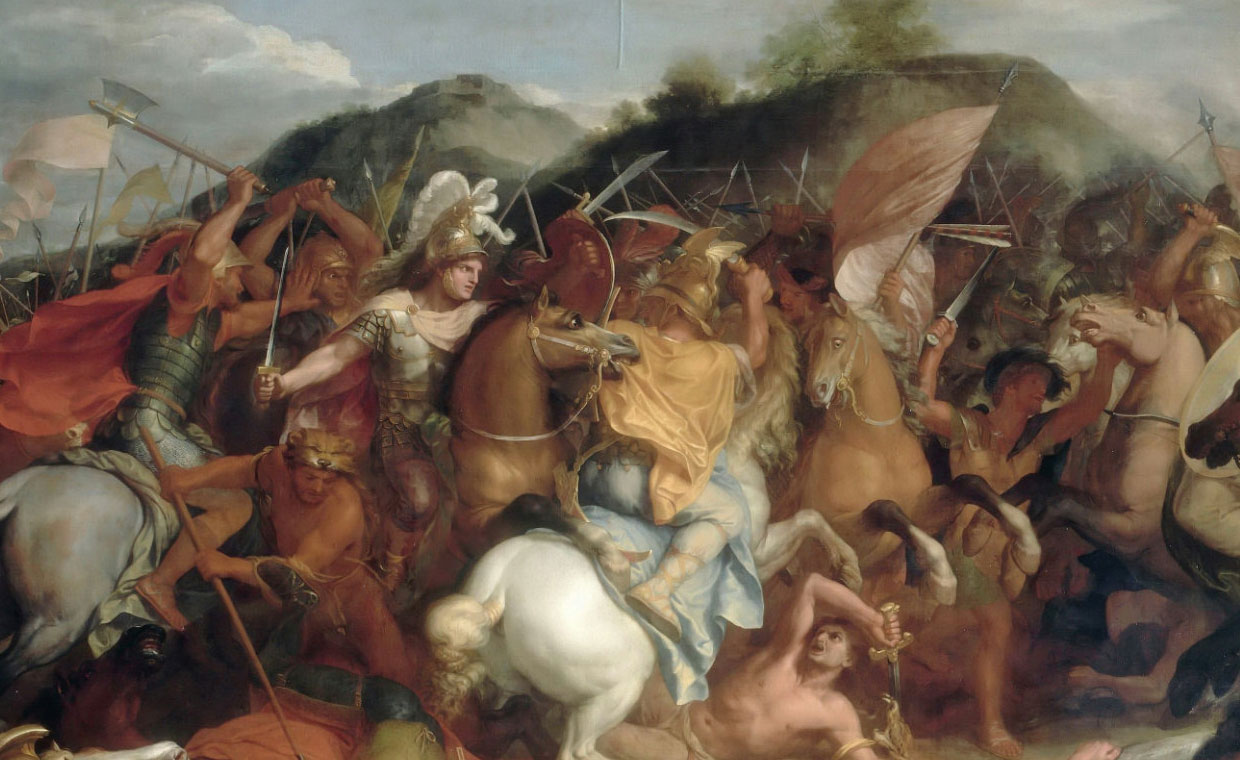
“In the Spring of 334 BC, the 22-year-old Macedonian king, Alexander III (r. 336–323 BC – not yet ‘the Great’), invaded the vast Achaemenid Persian Empire with an elite but small army of some 30-40,000 veteran infantry and only 5,000 cavalry. This invasion was the culmination of almost a century of pressure for some Greek commander or other to punish Persia for its own invasion of Greece during the fifth century BC. Persia had also continued to seriously meddle in Greek affairs thereafter, affecting the end of the Peloponnesian War in 404 BC and with the King’s Peace in 386 BC.
The mantle of leadership for this proposed invasion had passed from the Spartan king, Agesilaus II (r. c. 400-360 BC) to Athenian and then other Greek statesmen and then to the Macedonian king, Philip II (r. 359-336 BC), who had all but conquered Greece in 338 BC at the battle of Chaeronea. Philip, unlike his predecessors took up the challenge.
Philip had probably already begun plans for just such an invasion of Persia but, when he was assassinated in 336 BC, the responsibility for (and willingness to undertake) the invasion passed to his son Alexander. Alexander had commanded his father’s cavalry at Chaeronea so was already a veteran commander at the age of eighteen. He was not yet ‘the Great’ but his conduct on the invasion more than earned him the title and kings and commanders ever since have sought to emulate him.”
This episode was written by Murray Dahm.
Murray is an ancient and medieval military historian from New Zealand, living in Australia. He has written more than 100 articles on various aspects of ancient and medieval military history and other historical topics from all periods. He is the author of Macedonian Phalangite vs Persian Warrior, Athenian Hoplite vs Spartan Hoplite and Leuctra 371 BC, all from Osprey Publishing. He is a regular on the Ancient Warfare Podcast.