
Category: Military
-
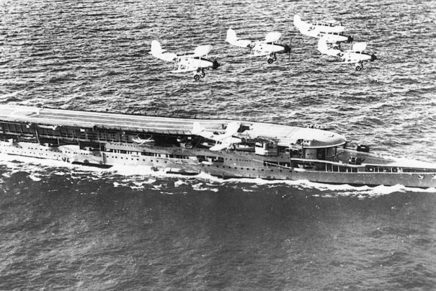
3008 – The Rise of Naval Aviation and the Aircraft Carrier
For centuries naval warfare consisted of vessels in relative close proximity to one, another fighting it out. This combat might take the form of ships in the ancient world ramming, or with the development of gunpowder vessels would launch broadsides at short range into the opposition. There would be many technological advances in naval warfare,…
-
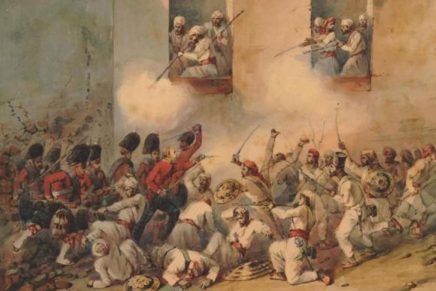
3007 – Days of Valour: The Victoria Crosses awarded during the Siege, Relief and Retaking of Lucknow
The Residency complex at Lucknow was under siege. It had been since late June 1857. It was now October. A small relief force had broken through from Cawnpore but it was then too weak to enable the combined garrison to break out. The combined garrison now contained fewer than 3,000 men, British soldiers, civilians, and…
-
3006 – Days of Valour: The Victoria Crosses awarded during the Siege, Relief and Retaking of Lucknow
“Throughout the Indian Mutiny of 1857-1858, a total of 182 Victoria Crosses were awarded; more than one third of those were awarded for actions in in the city of Lucknow. It is a place with which anyone who studies the history of military bravery should be intimately familiar. One of the most remarkable actions during…
-
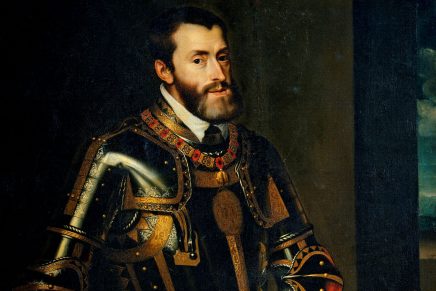
3005 – “The greatest man who ever lived or will ever live”: The story of Charles V, Holy Roman Emperor – Part 2
In this second episode of the life of Charles V Holy Roman Emperor we continue the story of his reign and of the conflicts in the first half of the 16th Century that shaped Europe and the world. The ruler of an empire is forever in the saddle and so it was with Charles. Conflict…
-
3004 – “The greatest man who ever lived or will ever live”: The story of Charles V, Holy Roman Emperor
‘Charles V, Holy Roman Emperor also known as Carlos was born in 1500 dying in the Spanish monastery of Yuste of malaria aged 58. As we list his titles, King of Spain, King of the Netherlands, Flanders and Belgium, Emperor of Austria and Hungary, ruler of much of Italy including Milan, Sicily, Sardinia and Naples…
-
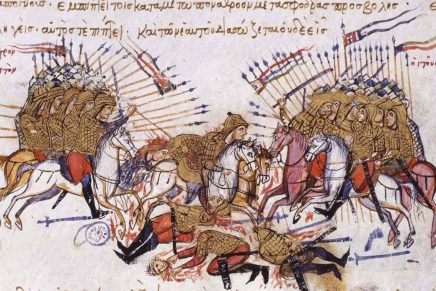
3003 – Byzantium’s Eastern Frontier
“The Byzantines, the subjects of the Eastern Roman Empire, were great survivors. They outlasted their cousins in the west by a thousand years, withstanding the great waves of barbarian invasions and even managing to flourish amidst the chaos. Less than a century after the last western emperor was deposed in 476, the Eastern Romans under…
-

3002 – The Vicksburg Campaign (part 2)
On May 18, 1863, Major General Ulysses S. Grant achieved the objective he had sought for months. Union troops surrounded Vicksburg on three sides, and on its west side, Admiral David Porter’s warships controlled the waters of the Mississippi. For three months Confederate Lieutenant General John C. Pemberton had watched as Grant flailed about in…
-
3001 – The Vicksburg Campaign
By the winter of 1862, the American Civil War was going poorly for the Union. Begun in 1861 with the secession of eleven Confederate states from the United States, Confederate forces had more than held their own in the field against Union Armies. In the Eastern Theater, the Confederate Army of Northern Virginia under General…
-
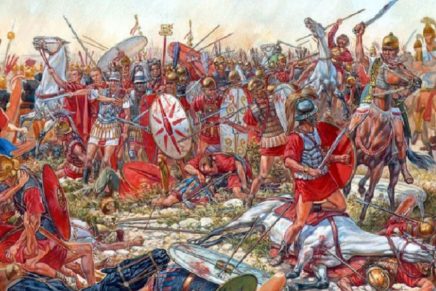
2910 – After Cannae: Dark Days for the Roman Republic
At the Battle of Cannae, 2 August, 216 B.C., Carthaginian general Hannibal Barca administered one of Rome’s most crushing military defeats. Depending upon the ancient source, Roman losses on the Apulian battlefield numbered anywhere from roughly 50,000, as Livy relates, to around 70,000, as Polybius insists. Hannibal had enacted a double envelopment of the Roman…
-
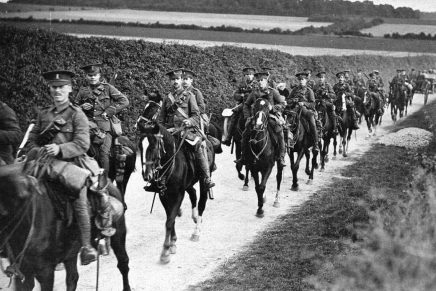
2909 – Army exercises in the English countryside, 1853-1914
The last pitched battles on English soil were Sedgemoor in 1685 and Preston in 1715. But after that the army still needed to train and practice. The first land on Salisbury Plain was not bought for army training until 1897 and Catterick Camp was opened after the outbreak of WW1. So from 1853 when there…